
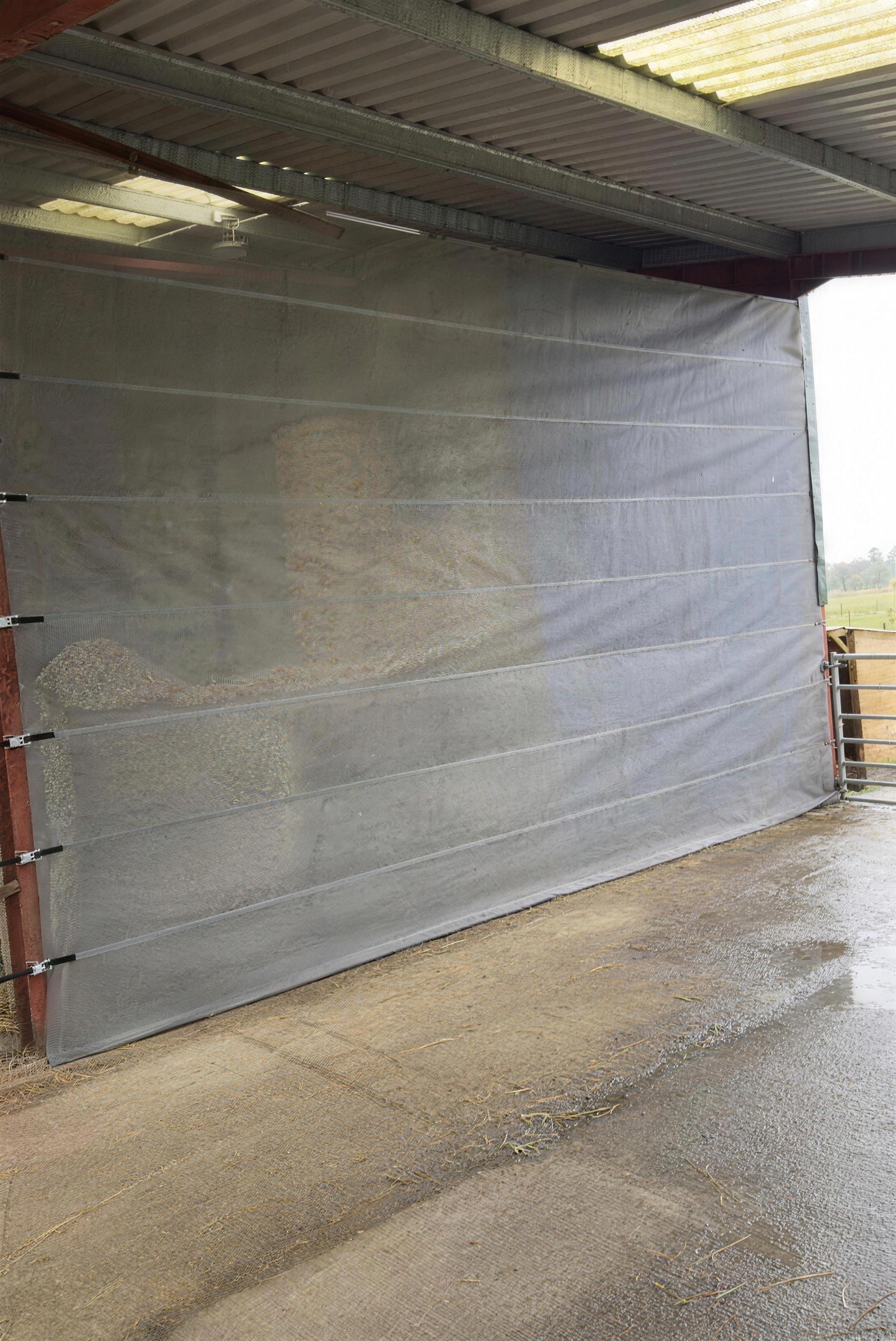
Fitted strap by strap, bay by bay.
Every welded strap carries a claw hook on one side and a ratchet on the other, so the windbreak tensions itself against your stanchions. Work down one bay at a time and the mesh pulls drum tight. Here is exactly how.
Everything you need, ready to hang.
Your windbreak arrives made to measure with high-frequency welded straps every 500mm. Each strap carries a claw hook on one side and a ratchet on the other, so there is nothing to assemble. Fixings to suit steel frames are included, along with a printed fitting guide.
- Made-to-measure coated PVC mesh windbreak
- Welded straps every 500mm with claw hooks and ratchets
- Fixings to suit steel frames, plus printed instructions
Important. Windbreaks are designed for steel structures only. They are not suitable for wooden buildings.
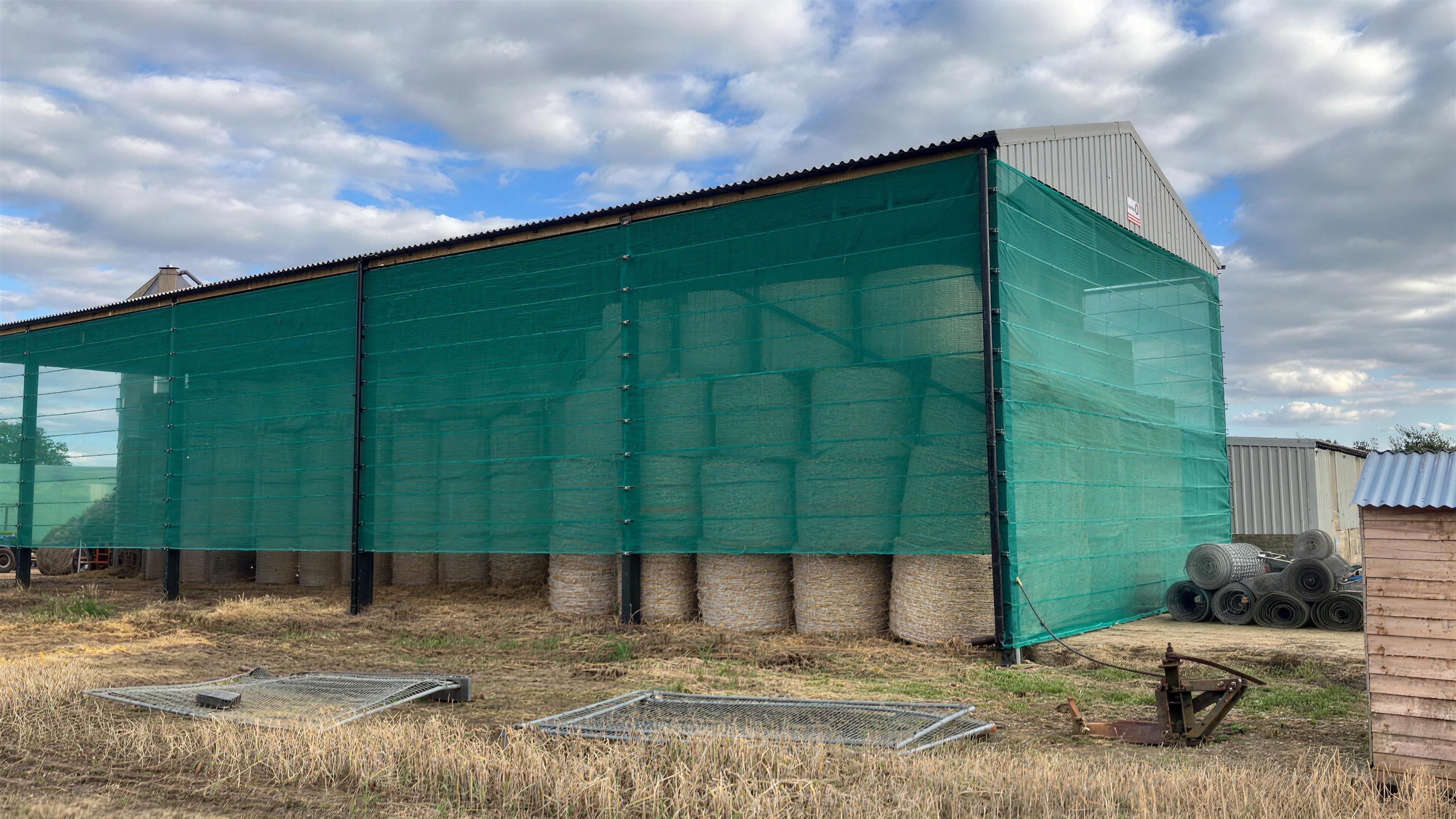
Five steps to a fitted windbreak
This is the short version of the printed guide that comes with your windbreak. Fit one bay at a time, working from the top strap down.
Hook the top strap to the first stanchion
Attach the claw hook at the top of the windbreak to the stanchion on one side of the opening, and secure it in place with a clamp while you work.
Take the ratchet across to the opposite stanchion
Carry the windbreak and its ratchet across the bay and attach the ratchet to the opposite stanchion, at the same height as the claw hook on the other side.
Thread the strapping and tighten
Thread the strapping through the ratchet and tighten until the strap is secure and the mesh starts to pull tight across the opening.
Remove the clamp
With the top strap tensioned, remove the clamp from the first stanchion. The strap now holds itself.
Work down, strap by strap
Repeat the same four steps with the next claw hook down, and keep going until every strap is attached and tensioned and the mesh sits drum tight.
More than one bay? Same job, repeated.
Fit the first windbreak across the first pair of stanchions exactly as above. Then fit the second windbreak using the middle stanchion and the next one along, so the ratchets of one windbreak and the claw hooks of the next share the middle stanchion. Repeat until every bay is covered.
Tools, time and help
- Tools you need
- A clamp, a ladder or platform for the top straps
- How long it takes
- Under an hour for a single bay
- How many people
- One can manage it, two is quicker on wide bays
- Stuck?
- Ring the production site, the makers will talk you through it
Fitting questions, answered plainly
No. Windbreaks are designed for steel structures only. The claw hooks and ratchets clamp to steel stanchions, and a timber frame will not take the tension safely.
Tighten each ratchet until the mesh pulls drum tight across the opening. A taut windbreak sheds wind properly and will not flap or chafe.
Ring us. You will get straight through to the people who made your windbreak, and they will talk you through whatever you are stuck on. No call centre, no tickets.
Ready when you are.
Design your windbreak online for an instant price, or request a made-to-measure quote.